
Material choice shapes what customers expect from your yoga brand: an accessible first mat, a natural-looking studio accessory, or a dependable surface for demanding practice. It also affects your wholesale cost, shipping weight, care requirements, and reasons customers might return a product.
For most collections, the decision comes down to three options. Cork suits hot-yoga and premium natural-material ranges. TPE suits lightweight, affordable starter products. Natural rubber suits performance-focused collections where grip and stability justify additional weight and cost.
There is one important distinction: cork usually describes the top surface, while TPE and natural rubber can form the mat itself or its backing. A cork-and-rubber mat combines two of these materials. Choosing the best yoga mat material for your brand therefore means comparing complete constructions, not just material names.
Cork vs. TPE vs. Natural Rubber: At a Glance
The table below compares typical cork-surfaced mats, uncoated TPE mats, and exposed natural-rubber mats. Cost and performance are relative to broadly comparable dimensions and specifications, not fixed ratings for every product.
| Buying factor | Cork yoga mats | TPE yoga mats | Natural rubber yoga mats |
|---|---|---|---|
| Dry grip | Moderate to good; surface finish matters | Generally suitable for dry, everyday practice | Often strong; texture and formulation matter |
| Wet grip | Often improves with light moisture; useful for sweaty practice | Can become slippery as sweat accumulates | Variable; heavy sweat may require a towel |
| Durability | Depends on cork quality, bonding, and backing; inspect edges and surface wear | Budget foams can show compression and abrasion sooner | Dense constructions suit repeated practice; sunlight and poor care can accelerate deterioration |
| Environmental considerations | Renewable cork surface; backing and adhesives affect the finished product | Usually synthetic; recycling depends on formulation and available collection | Renewable rubber feedstock; sourcing and compound composition still matter |
| Weight | Lighter with TPE; heavier with rubber | Usually the lightest option | Usually heavier at comparable size and thickness |
| Relative production cost | Medium with TPE backing; medium–high with rubber | Low for standard constructions | Medium–high |
| Best fit | Hot-yoga ranges, premium wellness retail, natural-material collections | Beginner kits, promotional programs, budget ranges | Dedicated practitioners, performance lines, studio use |
A low factory price does not automatically produce the strongest margin. Compare the packaged product: mat, branding, accessories, carton size, freight, and fulfillment. A lighter mat can still occupy substantial shipping space if it rolls into a large diameter.
Cork Yoga Mats: Natural Texture with a Hot-Yoga Advantage

Moisture-responsive grip
Cork is worth shortlisting when customers regularly practice with sweaty hands and feet. Its surface often becomes more grippy with light moisture, making it particularly relevant to heated classes and active flows. This is a different buying proposition from a mat selected primarily for immediate dry tack.
A dry-handed customer may find smooth cork less secure at the beginning of practice. For a hot-yoga range, compare samples both dry and lightly dampened. Look for predictable traction through transitions, rather than choosing a surface only because it feels sticky in a showroom.
Antibacterial properties: what the research means
Cork contains suberin, a structural plant polymer studied for its antimicrobial potential. A laboratory study of cork antibacterial activity also reported activity under its test conditions. These findings help explain interest in cork for frequently handled products, but they do not establish the antibacterial performance of every finished yoga mat.
For a studio purchasing shared equipment, cork’s material properties do not replace cleaning between users. If antibacterial performance is a purchasing requirement, request results for the actual finished construction. Surface treatments, binders, and processing make a finished mat different from the raw material used in a study.
Premium appearance and backing choices
Cork’s visible grain gives a collection a recognizable natural appearance. It works well for wellness boutiques and premium retail assortments where customers can see and touch the product. A restrained logo can leave more of that texture visible, while a physical branded sample establishes how clearly the design reads.
The backing determines much of the handling experience. Choose cork with TPE when portability and softer cushioning matter. Choose cork with natural rubber when a firmer, more grounded feel matters more than carry weight. Luna Yoga Group offers both constructions in its wholesale cork yoga mat range.
Inspect the surface after repeated rolling, particularly around the edges. The bond between cork and backing deserves as much attention as the initial appearance: an attractive surface has limited commercial value if the layers begin separating in use.
TPE Yoga Mats: An Accessible Entry Point

TPE, or thermoplastic elastomer, is a broad material category rather than a single formulation. Foamed TPE mats typically offer low weight and soft cushioning, making them practical for beginner kits, home practice, and customers carrying a mat to occasional classes.
For promotional products and entry-level retail lines, that combination helps keep the product approachable in both price and handling. A lightweight mat also leaves more flexibility when assembling a kit with blocks or straps, although the packed dimensions still need to fit your fulfillment budget.
The main tradeoff is specification sensitivity. Lower-density budget foam can develop pressure marks or surface wear sooner than a well-made, dense rubber construction. That does not make every TPE mat short-lived; it makes density, recovery after compression, and abrasion resistance important sample checks.
Sweat performance deserves separate attention. A textured TPE surface may feel secure when dry but lose traction once moisture builds up. For a budget hot-yoga kit, evaluate the mat together with a suitable towel rather than assuming dry grip will carry through a heated class.
TPE is the strongest starting point when your offer depends on easy carrying, accessible pricing, and occasional-to-moderate use. For a premium range promising intensive daily practice, compare its wear and support against the other constructions before committing. Explore our wholesale TPE yoga mats to review construction and customization options.
Natural Rubber Yoga Mats: Support for Performance-Focused Ranges
Natural rubber is a useful performance benchmark because well-made constructions combine grip with dense, resilient support. Compared with soft entry-level foam, that firmer platform can appeal to experienced practitioners who want less movement beneath their hands and feet.
This makes rubber a strong candidate for dedicated yoga collections and studio equipment. For Pilates-focused customers, assess kneeling and floor exercises separately: a stable yoga mat is not automatically the most comfortable choice for prolonged pressure on knees or elbows.
Weight is the clearest commercial tradeoff. A substantial rubber mat can feel reassuring in a studio but inconvenient for a commuter. For online sales, specify both product weight and packed weight so customers understand portability and your team can estimate delivery costs accurately.
Rubber also needs appropriate care. Direct sunlight can damage natural-rubber mats, and cleaning instructions should match the construction. Include an assessment of unpacking odor and storage conditions in the sample review, particularly for retail products that will spend time sealed in packaging.
Distinguish exposed rubber from rubber-backed mats. If the top layer is cork or PU, hands and feet interact with that surface. The rubber base contributes support and floor contact; it does not determine the entire wet-grip experience.
Browse our natural rubber yoga mat range for rubber-based sourcing options.
Where PU + rubber mats fit
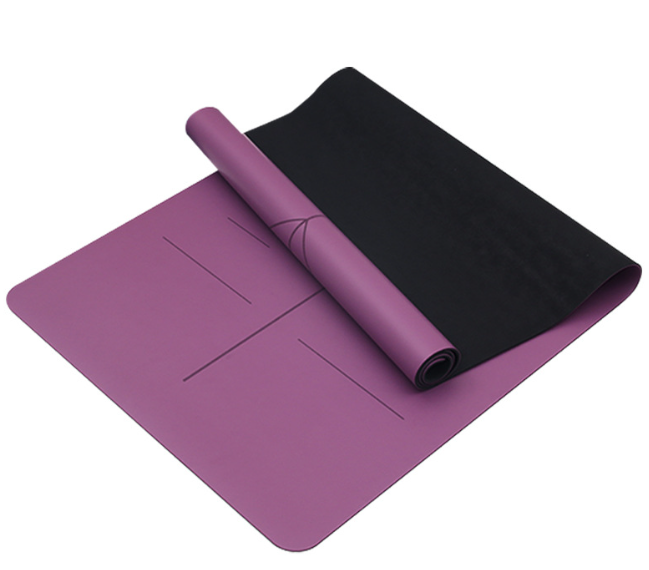
The pictured mat has a PU practice surface and a rubber base. The PU layer determines the feel beneath hands and feet, while the rubber base contributes support and floor stability. Assess this construction separately from exposed rubber in the comparison table above. Compare actual samples under dry and sweaty conditions before choosing a performance claim for your collection.
Explore PU yoga mats for wholesale and private-label projects if your collection needs a smooth practice surface and alignment-line branding.
Environmental Positioning: Compare the Whole Mat
For eco-friendly yoga mat sourcing, begin with composition. Cork is bark that can be harvested without cutting down the tree. Natural rubber comes from a renewable plant source. These are useful material attributes, but neither establishes the environmental footprint of a complete mat.
A cork-and-TPE mat and a cork-and-rubber mat contain different backing materials. Likewise, a natural-rubber compound may contain other ingredients. Ask for a construction breakdown that identifies the surface, base, bonding materials, and packaging before choosing a product for a natural-material collection.
TPE’s thermoplastic nature also does not guarantee that a finished mat can enter a customer’s local recycling stream. For procurement, distinguish renewable content, recycled content, recyclability, and biodegradability. Each describes something different and needs its own supporting information.
Which Material Fits Your Product Line?
For hot-yoga enthusiasts and premium natural-material collections, shortlist cork. Compare TPE and rubber backings according to the balance you need between portability and stability. Prioritize damp-grip evaluation and surface quality.
For promotions, beginner bundles, and budget ranges, shortlist TPE. Set a minimum acceptable level for compression recovery and wear. The cheapest sample is only useful if it meets the experience your customers expect.
For experienced practitioners and performance collections, shortlist natural rubber. Give weight, dry grip, support, and care requirements equal attention. A heavier mat is easier to justify when the benefit is evident during practice.
For a wider wholesale assortment, assign each material a clear role. An entry TPE mat and a premium cork-and-rubber model can address different budgets without requiring every customer to pay for the same construction.
What to Check Before an OEM or ODM Order
Send the same specification brief to each supplier when comparing yoga mat materials for wholesale. Our custom yoga mat development and private-label yoga mat services explain how construction, branding and packaging fit into the sourcing process. Include dimensions, thickness, intended use, target quantity, logo treatment, packaging, and destination market. Otherwise, price differences may reflect different products rather than better value.
Use sample approval to resolve five practical questions:
- Grip: How does the surface behave with dry hands, light moisture, and repeated transitions?
- Support: Does it recover after pressure, and is the cushioning appropriate for the intended exercises?
- Construction: Does it lie flat, resist edge damage, and maintain its layer bond after rolling?
- Branding: Is the logo clear, correctly positioned, and durable enough for normal handling?
- Delivery economics: What are the final roll diameter, unit weight, carton dimensions, and units per carton?
For Amazon sellers and retail chains, include barcode placement and packaging protection in the approval. For studios, include the actual cleaning routine. These details help make the approved sample a usable production reference. Review our yoga mat quality control process when setting your inspection requirements.
Frequently Asked Questions
Is a PU rubber mat the same as a natural rubber mat?
No. PU describes the practice surface, while rubber describes the base in a PU + rubber construction. Exposed rubber mats have a different surface. Compare the complete construction and test grip, care and wear for each option.
Is cork better than rubber for hot yoga?
Cork is a strong option when customers prefer a surface whose grip improves with moisture. It is not universally better: rubber textures and cork finishes vary. A cork surface with a rubber base can combine moisture-responsive traction with dense support. Compare complete mats under the same practice conditions.
Which material is best for a beginner yoga brand?
TPE is usually the most practical starting point for a lightweight, affordable beginner range. Cork may fit better if natural appearance is central to the brand, while rubber suits an offer focused on performance from the first purchase.
Does a thicker mat always perform better?
No. Thickness affects cushioning, but density and construction affect how much the mat compresses. Compare comfort during kneeling with stability during standing poses. For mixed yoga and Pilates ranges, those needs may justify separate specifications.
Can cork yoga mats be customized for private-label orders?
Yes. Luna supports cork mat projects with custom branding, dimensions, thicknesses, backing colors, and packaging. Selecting the backing first helps align the finished product’s weight and feel with the intended collection.
Request a Material Sample Pack
Before placing a bulk order, compare cork, TPE, and natural rubber side by side. Request a material sample pack from Luna Yoga Group, and include your intended practice style, target retail price, preferred dimensions, and estimated order quantity.
Ask to compare cork with both backing options if you are developing a premium range. Material swatches help assess texture; full-size samples are more useful for checking support, rolling, and floor stability. All samples are free; shipping costs are paid by the customer. Sample preparation time is confirmed for each product and customization request. International shipping time is quoted separately. Specify whether you need material swatches or full-size mats when requesting your sample selection.
Include your preferred construction, dimensions, customization requirements, estimated quantity and shipping destination so our team can prepare a relevant response.